
Choosing The Right Subwoofer
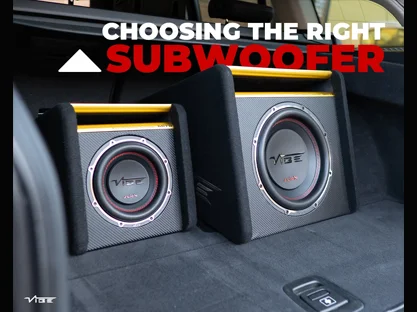
Best Subwoofer Enclosures & Bass Boxes — Complete Guide
Looking for the best subwoofer, best bass box, or best subwoofer enclosure for your car? This guide covers every factor that separates a system that sounds impressive from one that genuinely performs.
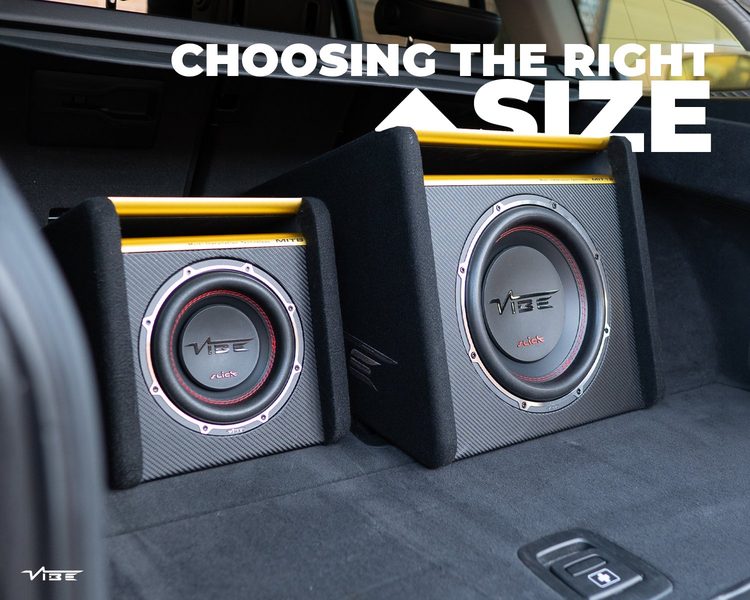
The core principle
The best subwoofer enclosure is not the biggest one — it’s the one correctly matched to your subwoofer’s T/S parameters, your available boot space, and your listening goals. A well-matched 10″ bass box will always outperform a poorly matched 15″ subwoofer in a random enclosure.
Best Subwoofer Enclosures & Bass Boxes from VIBE Audio
VIBE Audio has been building subwoofer enclosures and bass boxes in the UK since 1993. Every enclosure in the VIBE range is designed as a complete system — the subwoofer driver and the enclosure are engineered together, so you never have to guess whether they’ll perform.
BEST OVERALL – Subwoofer Enclosure – Bass Box
VIBE M.I.T Enclosure Range
The UK’s best-selling pre-built subwoofer enclosure range. M.I.T. (Maximum Impact Technology) pairs each driver with a specifically tuned ported bass box — designed as a matched system for consistent, reliable bass performance without any expertise in T/S parameters.
BEST SLIM FIT – Flat Bass Box – Space Saving
VIBE BlackAir Flat Bass Box Series
The BlackAir series delivers genuine bass performance from an ultra-slim flat bass box profile. Designed for installs where boot depth is the limiting factor — fits under seats and in shallow boots where a conventional bass box won’t fit.
BEST COMPACT – Optimised Enclosure – Space Efficient
VIBE M.I.B Optimised Enclosures
The M.I.B. range is engineered to extract maximum bass performance from real-world boot constraints. Where a standard subwoofer enclosure would be too large, M.I.B. uses careful enclosure tuning to deliver serious output from a significantly smaller footprint.
BEST SQ – Sound Quality Subwoofer – Competition Grade
VIBE CVEN SQ Subwoofer Series
The CVEN subwoofer range is VIBE’s flagship sound quality driver — created with no budget constraints for listeners who demand accuracy over raw output. Pairs with the CVEN10DSP-V5 for a complete DSP-controlled SQ system.
Step 1 — Choosing the Right Subwoofer Size
The right subwoofer size for your car depends on your output goals and available boot space. Cone area is the primary determinant of potential output — more cone area moves more air. But a larger subwoofer in the wrong enclosure will underperform a smaller sub in a correctly matched bass box.
6.5″ / 8″ Compact installs and limited boot space. Best as a flat bass box or under-seat solution.
10″ / 12″ Best subwoofer size for most daily installs — strong output, practical enclosure size, wide amplifier compatibility.
15″ / 18″ Maximum SPL output and the deepest low-end extension. Requires a large, properly tuned enclosure.
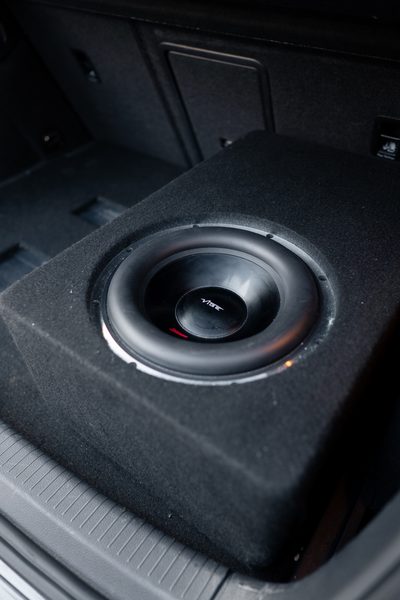
Step 2 — Subwoofer Enclosure Size: The Missing Link
The subwoofer enclosure (bass box) is the single most overlooked factor in car audio. Every subwoofer has T/S parameters — Fs, Qts, and Vas — that define exactly what size and type of enclosure it needs to perform correctly. Fit the wrong enclosure and even the best subwoofer will underperform.
Small bass box
- Tighter, punchier bass (40–60 Hz focus)
- Less low-end depth and extension
- Sub can feel “restricted”
- Better for compact boot installs
Correct enclosure volume
- Sub performs to its design spec
- Full low-end extension (20–40 Hz)
- Maximum efficiency and output
- Bass feels natural and unforced
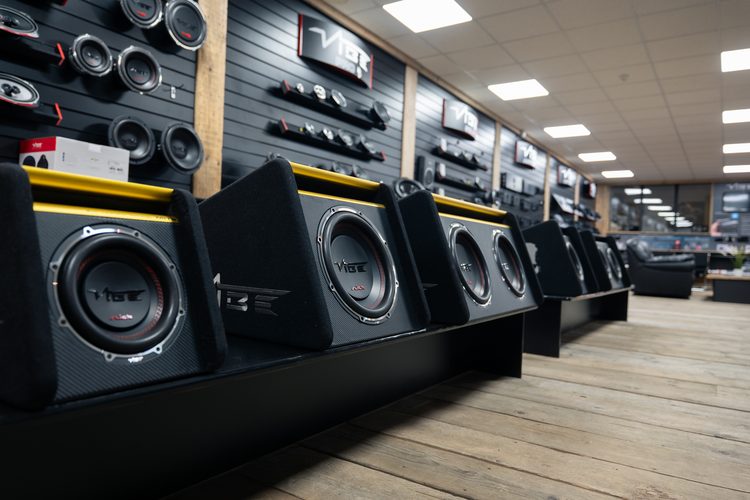
Why pre-built bass boxes win: A matched bass box like the VIBE M.I.T. range removes all guesswork — the enclosure volume and port tuning are specifically designed for the included subwoofer. This is why pre-built subwoofer enclosures consistently outperform random driver-and-box combinations at the same price point.
Step 3 — Subwoofer Types Explained
Understanding subwoofer types helps you identify which enclosure and amplifier you’ll need before you buy. The physical design of a subwoofer tells you almost everything about its intended application.
SPL
- PHYSICAL BUILD: Huge surrounds, very deep basket, massive stacked magnets, multiple spiders
- PERFORMANCE PROFILE: Xmax 15–30mm+. Needs serious power. Best in large, low-tuned ported enclosures.
- BEST ENCLOSURE MATCH: Large ported bass box, low tuning
EFFICIENT
- PHYSICAL BUILD: Smaller surrounds, shallower basket, compact magnet, lighter cones
- PERFORMANCE PROFILE: Xmax 6–12mm. High sensitivity. Works well on lower power.
- BEST ENCLOSURE MATCH: Compact sealed or small ported box
ALL – ROUNDER
- PHYSICAL BUILD: Moderate surround, medium magnet, solid balanced build
- PERFORMANCE PROFILE: Xmax 10–20mm. 500–1500w. Flexible in small and medium enclosures.
- BEST ENCLOSURE MATCH: M.I.T. style pre-built bass box
SQ
- PHYSICAL BUILD: Clean design, lighter cones (paper/composite), precision-focused build
- PERFORMANCE PROFILE: Xmax 8–15mm, highly linear. Low distortion. Excellent motor control.
- BEST ENCLOSURE MATCH: Sealed or shallow-tuned ported box
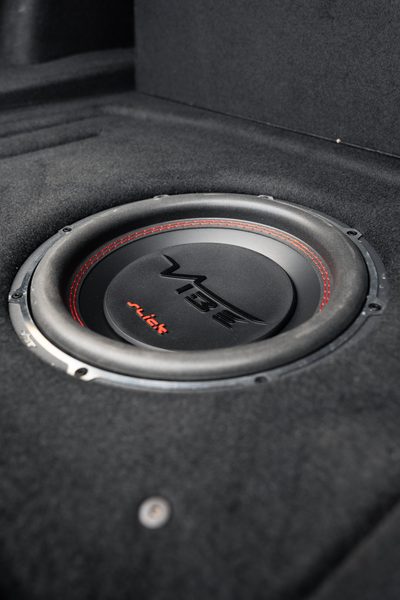
Understanding Xmax & Why It Matters for Bass Box Selection
When comparing subwoofers for a bass box install, Xmax is one of the most important specifications to understand.
XMAX – Linear excursion — controlled cone movement, low distortion
XMECH – Mechanical limit — exceed this and you destroy the driver
SPL – 15–30mm+ Xmax — needs a large bass box tuned low
SQ – 8–15mm Xmax — accuracy over distance, any enclosure size
Common Subwoofer & Bass Box Myths — Busted
- MYTH “A bigger bass box always sounds better” A subwoofer enclosure that’s too large for the driver is just as damaging to performance as one that’s too small. Every subwoofer has an optimal enclosure volume defined by its Vas parameter. The best bass box is one matched to spec — not the biggest one that fits in the boot.
- MYTH “Big subwoofers are slow, small subs are tight and fast” What determines how a subwoofer sounds is enclosure design, tuning frequency, and motor strength — not cone size. A properly tuned 12″ bass box can sound tighter than a poorly tuned 8″. The sub type and enclosure design determine character, not diameter.
- MYTH “More watts = better bass” A high-sensitivity 12″ subwoofer in the correct bass box will get louder on 500w than a low-sensitivity 15″ on 1000w. Sensitivity and enclosure efficiency determine loudness — not raw wattage. Match your amplifier output to the subwoofer’s RMS rating, not the peak figure.
- MYTH “DVC subwoofers are more powerful than SVC” Dual voice coil is a wiring flexibility feature — it lets you match the subwoofer’s impedance to your amplifier’s optimal output. Power handling is determined by voice coil size, motor design, and cooling — not the number of coils.
T/S Parameters — Matching Sub to Bass Box
If you’re building a custom subwoofer enclosure rather than buying a pre-matched bass box, T/S parameters are the key to getting it right.
Fs
- What it means – Free-air resonant frequency — how low the sub naturally plays
- How it effects your bass box choice – Lower Fs = deeper potential bass extension. Important for setting port tuning.
Qts
- What it means – Total Q factor — describes cone damping behaviour
- How it affects your bass box choice – High Qts (0.7+) suits sealed boxes. Low Qts (<0.4) suits large ported enclosures.
Vas
- What it means – Equivalent compliance volume — air volume the suspension mimics
- How it affects your bass box choice – High Vas = needs a larger enclosure. Low Vas = works in compact bass boxes.
Skip the maths: Pre-built subwoofer enclosures like the VIBE M.I.T. range have T/S parameters already calculated and built in. The subwoofer is chosen for the specific enclosure volume and port tuning — delivering optimised performance without any design knowledge needed.
UK’S BEST-SELLING BASS BOXES
Shop the Full VIBE Subwoofer Enclosure Range
From the M.I.T. bass boxes to the BlackAir flat subwoofer series and the CVEN SQ range — every VIBE enclosure is a matched, optimised system engineered in the UK since 1993.
View VIBE subwoofer enclosures
The Takeaway
The best subwoofer enclosure or bass box for your car is always the one correctly matched to your subwoofer, your boot space, and your power. Cone area determines potential. Enclosure design determines performance. Subwoofer type determines character. Setup determines how it sounds every day.
If you want the best bass performance without the complexity of custom enclosure design, a matched pre-built bass box like the VIBE M.I.T. range delivers consistent, optimised results every time. If you want maximum control and the deepest possible bass, pair any VIBE subwoofer with the VIBE CVEN10DSP-V5 for full DSP tuning from your phone.
Frequently Asked Questions
What is the best subwoofer enclosure for a car?
The best subwoofer enclosure for a car is one matched to the specific subwoofer’s T/S parameters — particularly its Vas, Qts, and Fs values. For most daily installs, a pre-matched ported bass box like the VIBE M.I.T. range is the best choice: the subwoofer and enclosure are engineered together, removing all guesswork. For compact installs, the VIBE SLICK flat bass box delivers genuine performance from a slim profile that fits in tight spaces.
What is the best bass box for a car?
The best bass box depends on your priorities. For overall bass output and practicality, the VIBE M.I.T. range is the UK’s best-selling matched bass box — it combines a specifically tuned subwoofer enclosure with a matched driver at an accessible price. For space-constrained installs, the VIBE SLICK flat bass box fits under seats and in shallow boots. For the most accurate, low-distortion bass, the VIBE CVEN subwoofer range in a custom sealed or shallow-ported enclosure delivers competition-grade sound quality.
What is the best subwoofer for a car?
For most people, the best car subwoofer is an all-rounder in the 10–12 inch size range, paired with a correctly tuned enclosure. VIBE Audio’s best-selling subwoofer systems include the M.I.T. range (pre-matched enclosure + driver), the SLICK series (flat bass box form factor), and the CVEN range (flagship SQ driver for audiophile and competition installs). If maximum SPL output is your priority, the VIBE BlackDeath range delivers extreme output on serious amplifier power.
Is a sealed or ported bass box better?
Sealed enclosures produce tight, controlled bass with a gradual roll-off below resonance — ideal for SQ builds and compact installs. Ported enclosures use a tuned port to extend bass output at a specific frequency, producing more volume and deeper extension at the cost of a steeper roll-off below the port frequency. Most pre-built VIBE bass boxes are ported and tuned for the included subwoofer, making them the best choice for most daily listening installs where a balance of output and extension is the priority.
How much space does a subwoofer enclosure need in a car boot?
Required boot space varies significantly by subwoofer size and enclosure type. A 10 inch bass box typically needs 20–35 litres of internal volume. A 12 inch enclosure typically needs 30–50 litres. Flat bass box designs like the VIBE BlackAir can achieve this in a fraction of the depth of conventional enclosures. If boot space is a major constraint, the VIBE M.I.B. range is specifically engineered to maximise bass performance within real-world space limitations.
Do I need a subwoofer box, or can I use a bare subwoofer?
Every subwoofer requires an enclosure to perform correctly — a bare driver without a box will produce very little useful bass and risks damage from uncontrolled cone excursion. The enclosure controls the air load on the rear of the cone, affecting the subwoofer’s resonant frequency, damping behaviour, and efficiency. The only exception is free-air subwoofers specifically designed to use the car’s boot as an enclosure by firing through a parcel shelf — but even these need a sealed boot to be effective.
What subwoofer size is best for daily listening?
For daily listening, a 10 inch or 12 inch all-rounder subwoofer in a pre-matched bass box offers the best balance of output, bass quality, and boot space. These sizes work with a wide range of amplifiers (500–1500w RMS), produce both punch and depth, and fit comfortably in most car boots. The VIBE M.I.T. 10 and 12 inch bass box range is the UK’s most popular choice for exactly this application.